The Long-Term Key to Employee Engagement: What Our Data Shows
Can a wellness platform really keep employees engaged and active over the long term – not just for one exciting challenge? It is one of the questions we hear most often. To answer it honestly, we looked at real (anonymized) customer data and picked out the patterns that keep repeating, including the less flattering ones.
This is the second part of our YuMuuv Data Series. In the first part, we analyzed activity by user group and found a clear link between owning a heart rate device and being more active – a finding supported by recent research. This time, we focus on company culture.
Key Takeaways
- Engagement can grow steadily – in one company, users more than quadrupled while headcount grew about 50%.
- Higher participation can temporarily lower average activity, as less active people join – and that is a good sign.
- New participants become noticeably more active within about three months.
- Challenges clearly lift activity, and long breaks clearly lower it.
- Rewarding everyone who reaches a goal motivates more people than big prizes for a few.
Table of Contents
Research Questions
Instead of broad statistics, this time we looked qualitatively at specific companies to find recurring models. We asked:
- What is the impact of long-term YuMuuv use on engagement?
- What is the impact of long-term YuMuuv use on physical activity?
- How important is organizing challenges for both?
Limitations
Company headcount changes over time, and we do not track it. Based on samples, participation in small and medium-sized companies averages around 40% of employees, and is much higher in the best cases. We also usually do not know what companies communicate internally about YuMuuv, so we cannot always separate the platform's effect from a company's own efforts. We have limited information on prizes, too. Please read the examples as illustrations, not scientific proof.
Engagement Patterns
1. 1. Engagement Can Grow Steadily
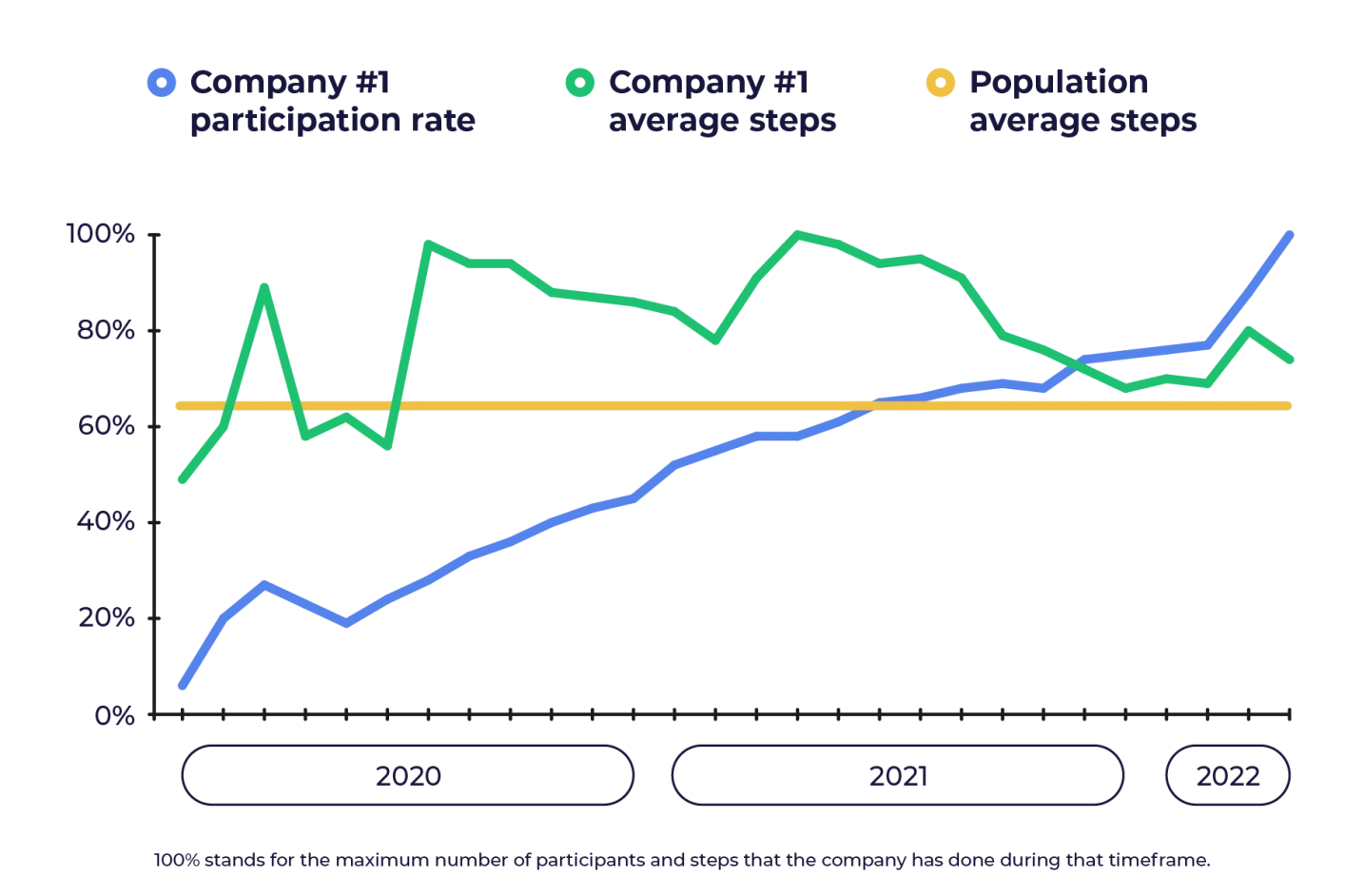
This company shows stable, growing participation. While the company itself grew by about 50%, its YuMuuv user base more than quadrupled over the same period. Growth came in waves, but clearly – the result of building a consistent culture, supported by good benefits and regular communication. It is not a unique case, but a trajectory available to any company that takes the topic seriously.
2. 2. Higher Participation Can Mean Lower Average Activity
The most active employees usually join first. As participation grows, less active colleagues join too, which can pull the average down. That is actually positive: active people inspire others to try, creating the conditions for cultural change. So do not judge success by average activity alone – look at participation as well.
3. 3. Challenges Help New Participants Become More Active
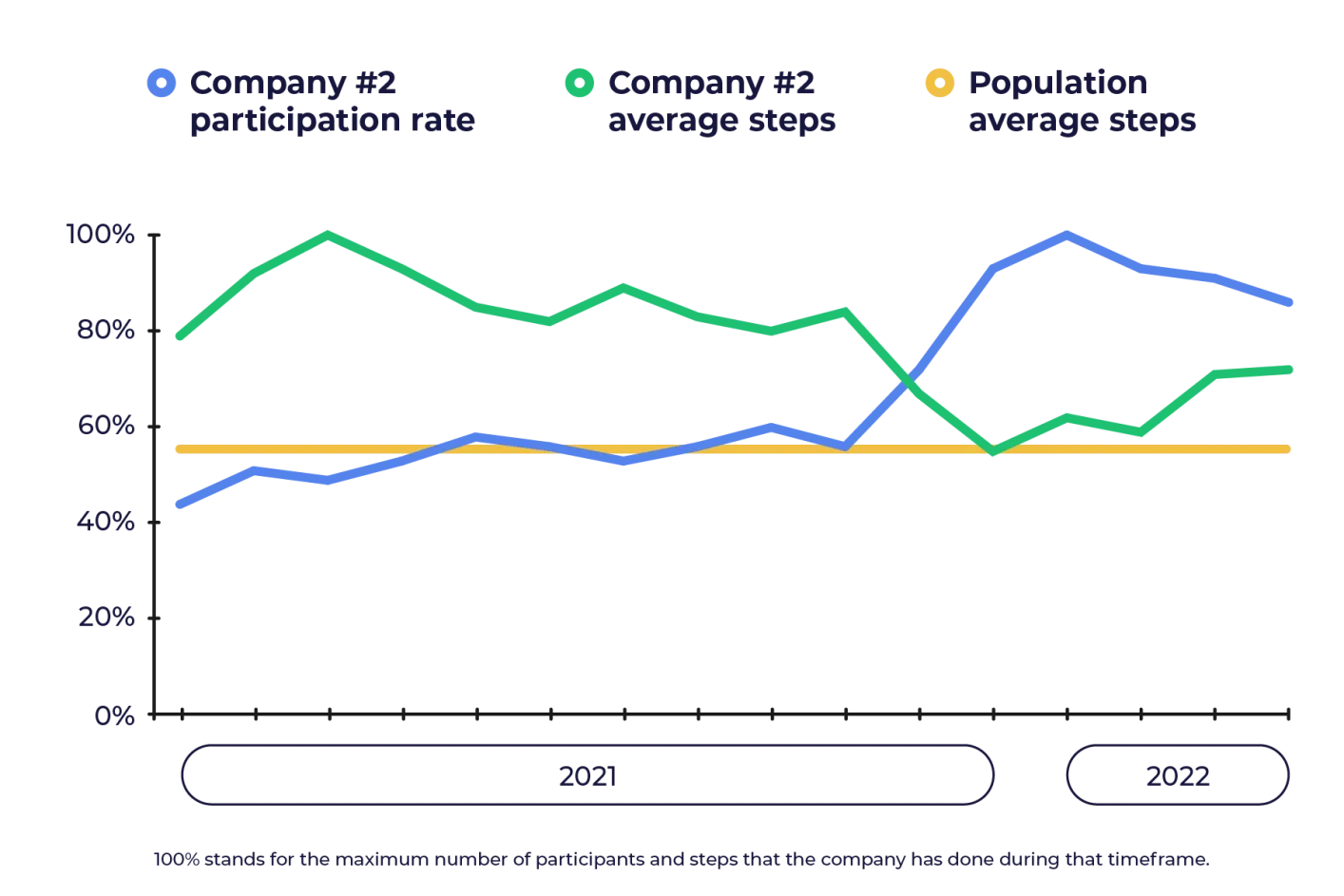
New joiners do not have to stay less active. In this example, the activity of new participants rose significantly within three months. After an initial settling-in period, regular challenges and the culture around them help healthier habits develop.
Activity Patterns
1. 4. Participation and Activity Can Grow Together
This company grew both participation and activity at the same time. A key factor: it ran challenges at different levels for different groups simultaneously, so everyone could join the one that felt most exciting and challenging for them.
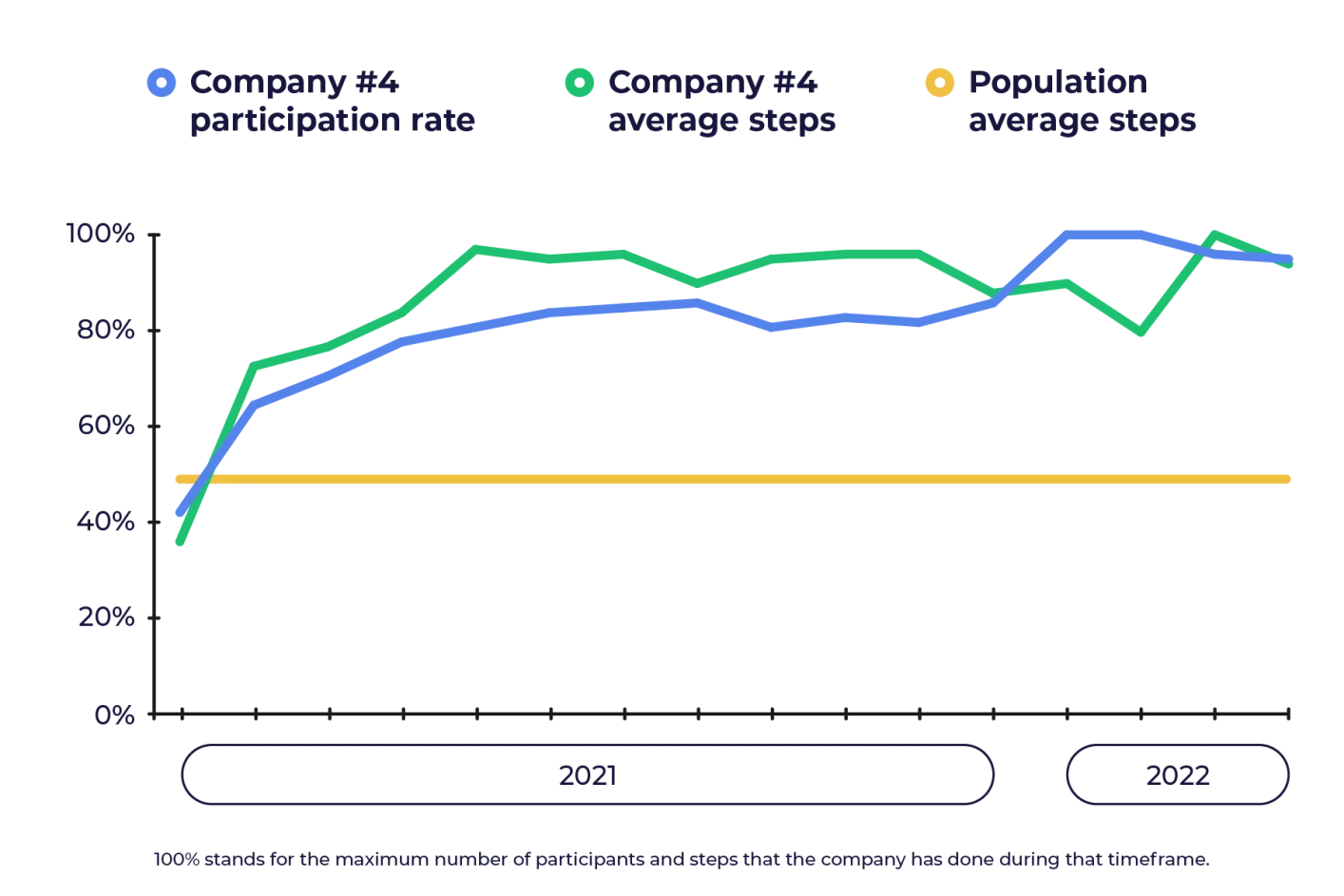
2. 5. Participation and Activity Can Plateau
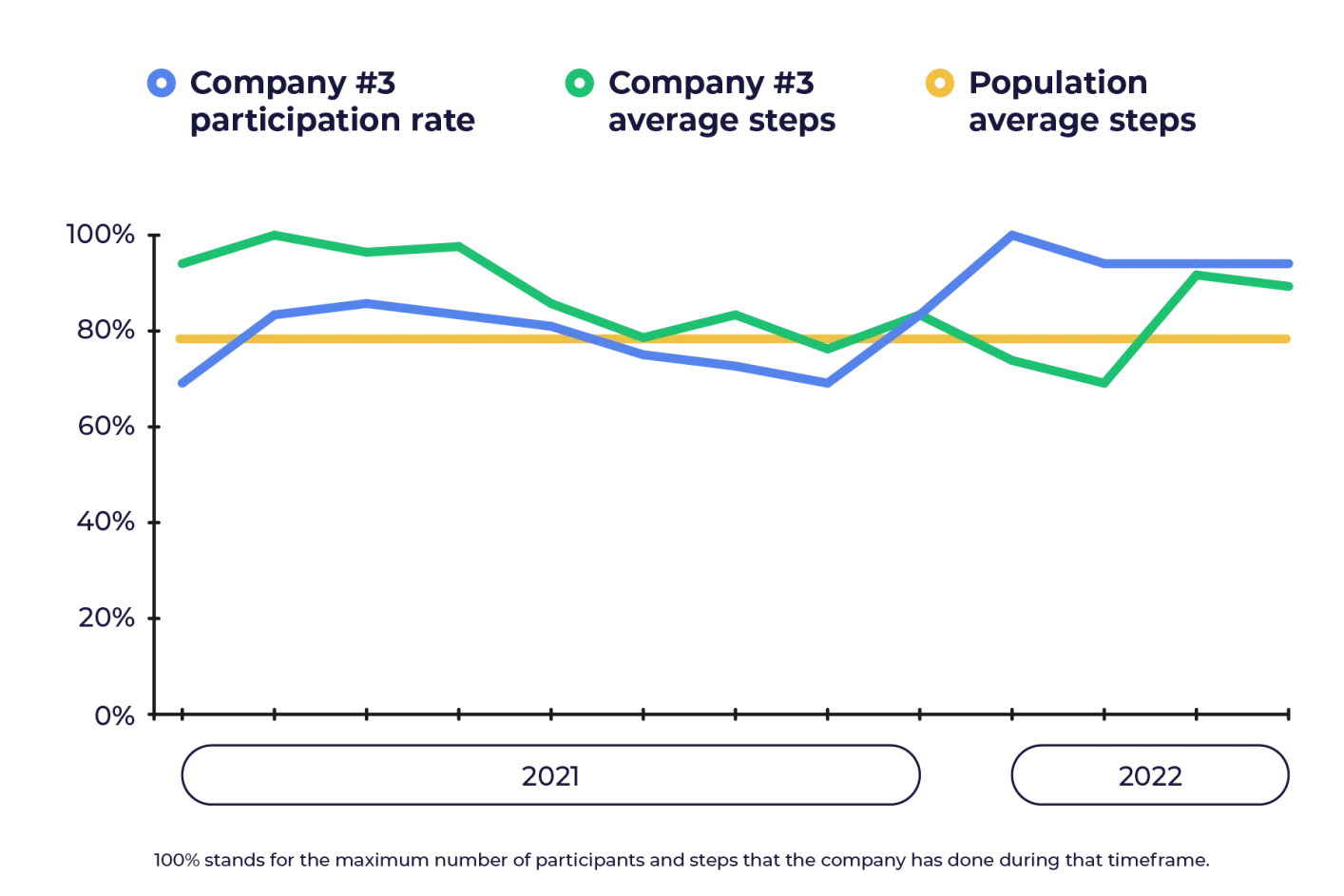
Here, an early jump was followed by a stable level, maintained with little effort. The people who wanted the app found it, and everything works for them. Their activity is well above the population average, but the bigger question is how to keep growing. This company invested little in prizes or in attracting new people. From time to time, something bigger – like a challenge with attractive prizes – is needed to reach those who are not motivated by the idea of lifestyle change alone.
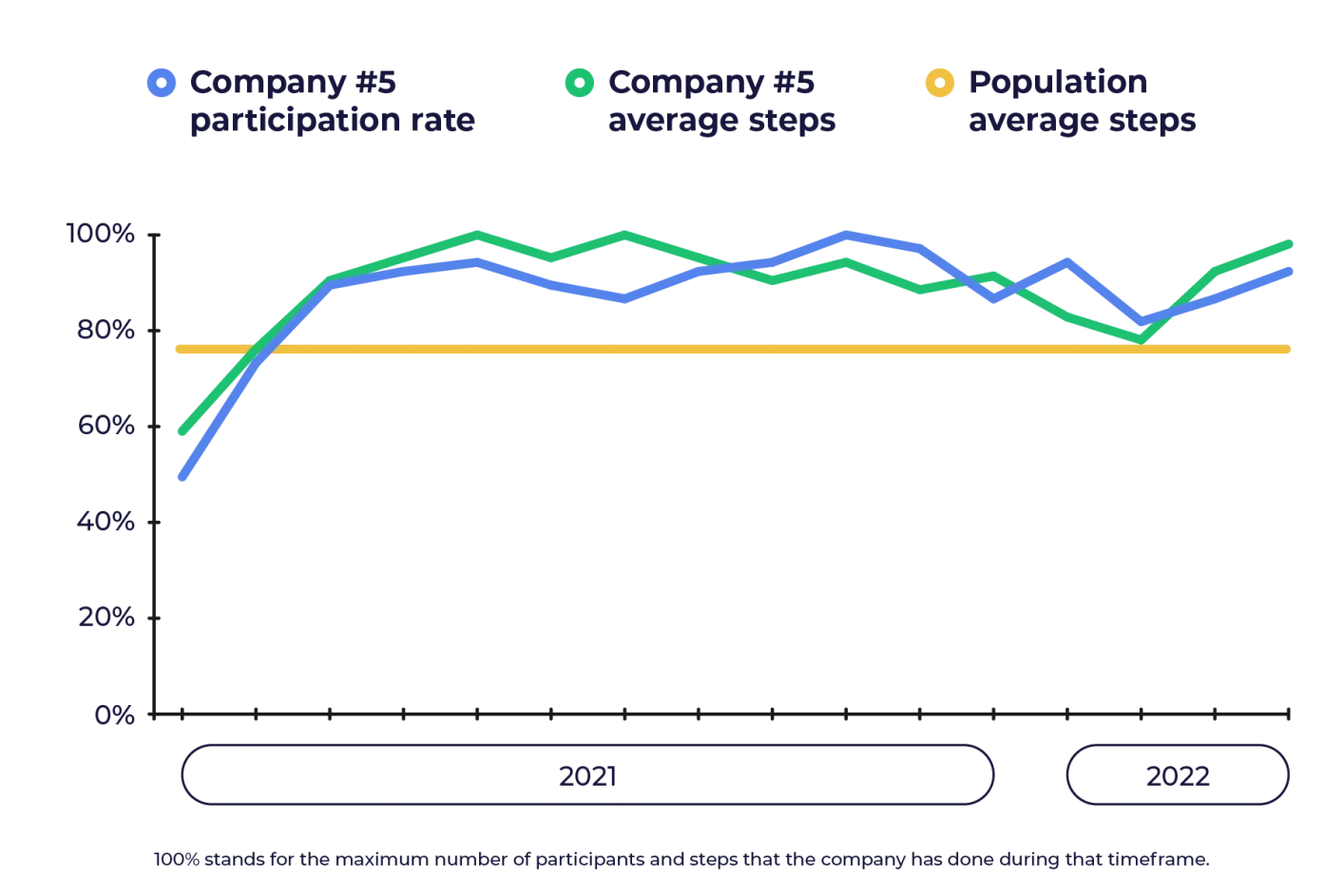
3. 6. Participation Can Decline
We wanted to show the full picture, not just the good news. In this example, engagement declined over time but still stayed at around two-thirds of its earlier level. Behind the numbers, the company had to make layoffs for commercial reasons and cut back on challenge rewards – yet chose to keep using YuMuuv during difficult times. It is a reminder to always look behind the numbers before drawing conclusions.
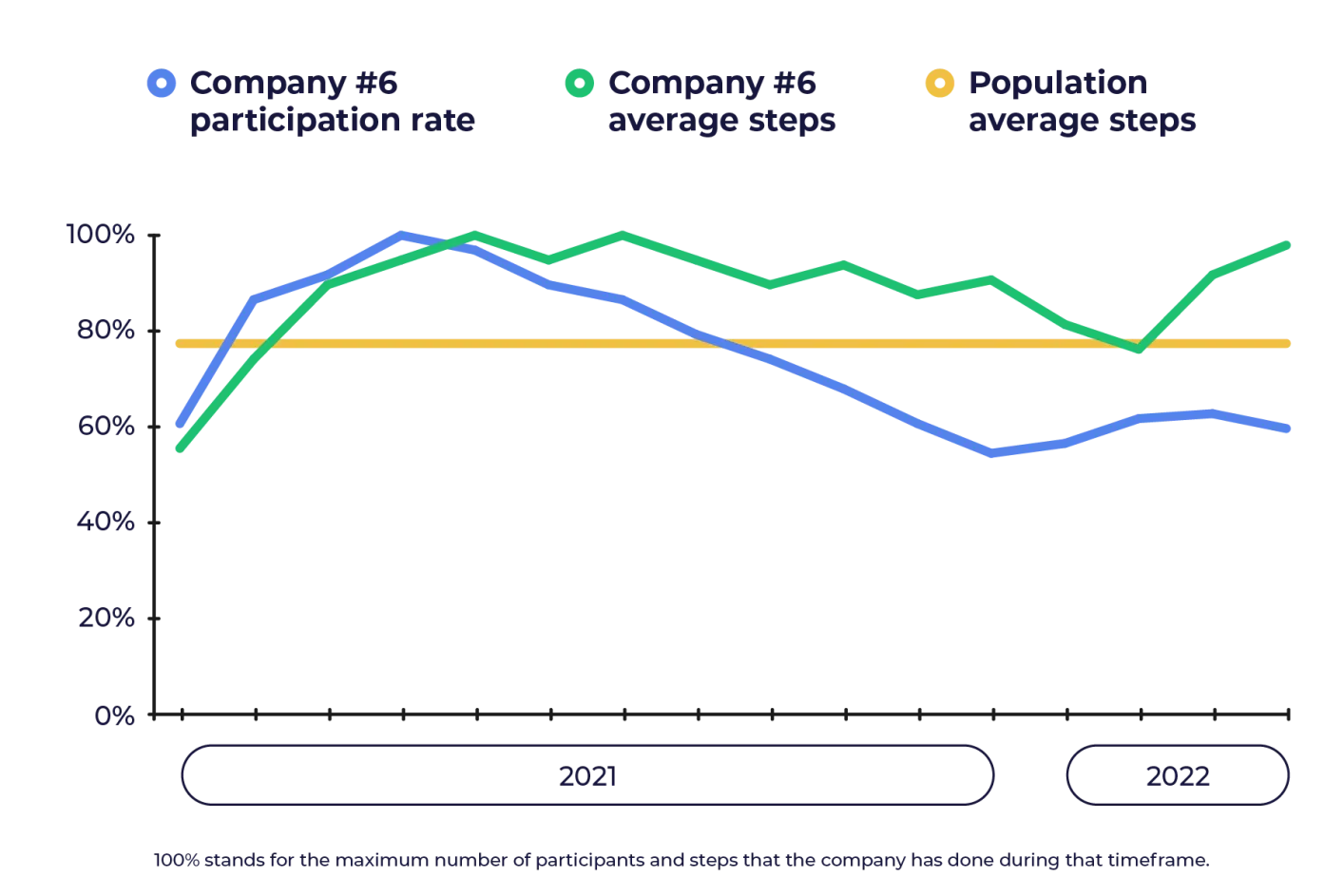
The Role of Challenges
1. 7. Challenges Lift Activity
Looking at companies that took breaks of more than a month between challenges, activity clearly rises during challenge periods, even though people can use the app at any time. Whether a single challenge creates lasting change is a separate question, but challenges certainly create extra motivation.
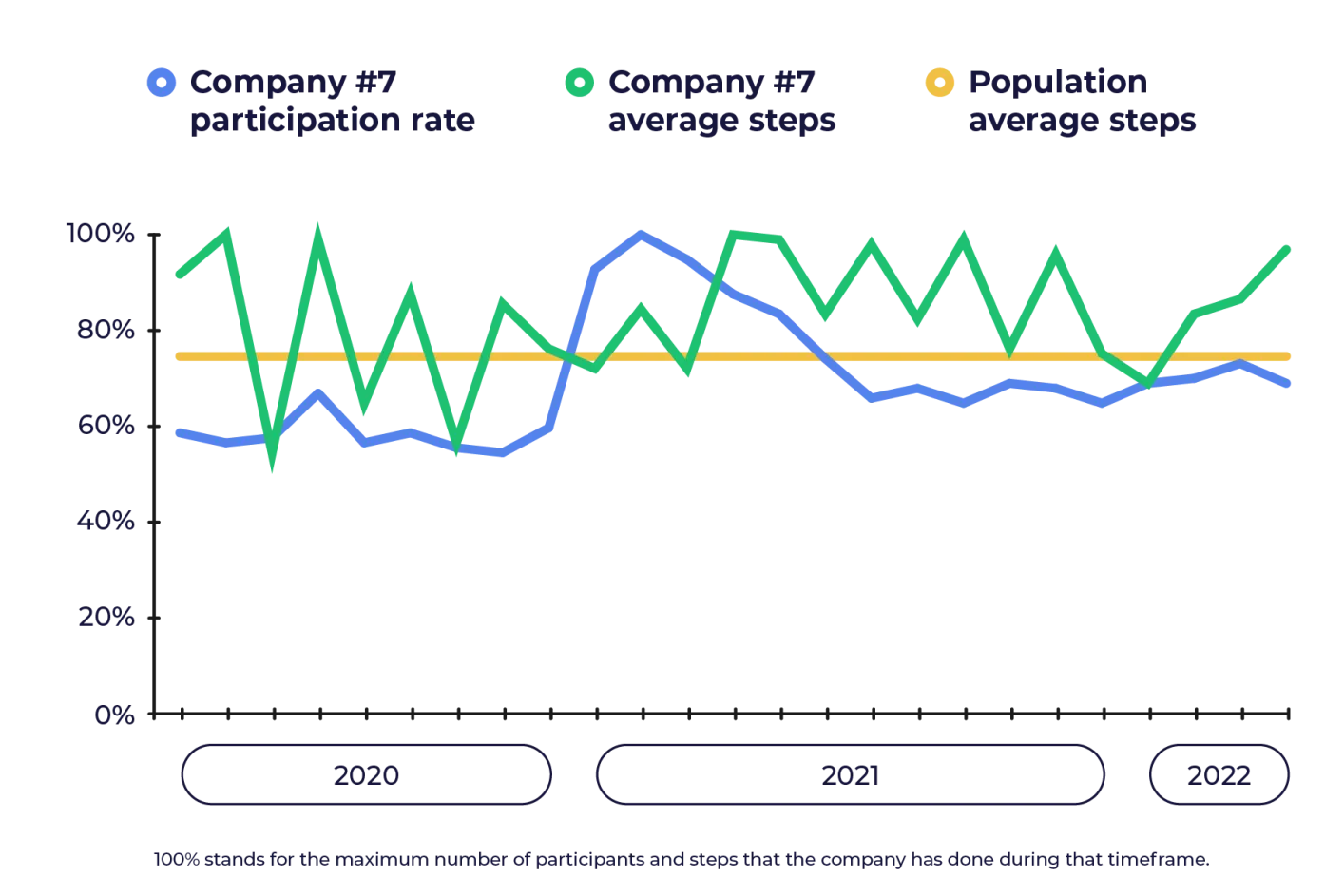
2. 8. Long Breaks Hurt Activity Culture
This company took a long break from running challenges (participants could still use the app). Activity dropped during the break. After returning to regular use, activity and participation became much more stable again. Since it takes time to “warm up” and “cool down”, avoid long breaks – instead, switch focus for a while, for example to sleep or mental health challenges.
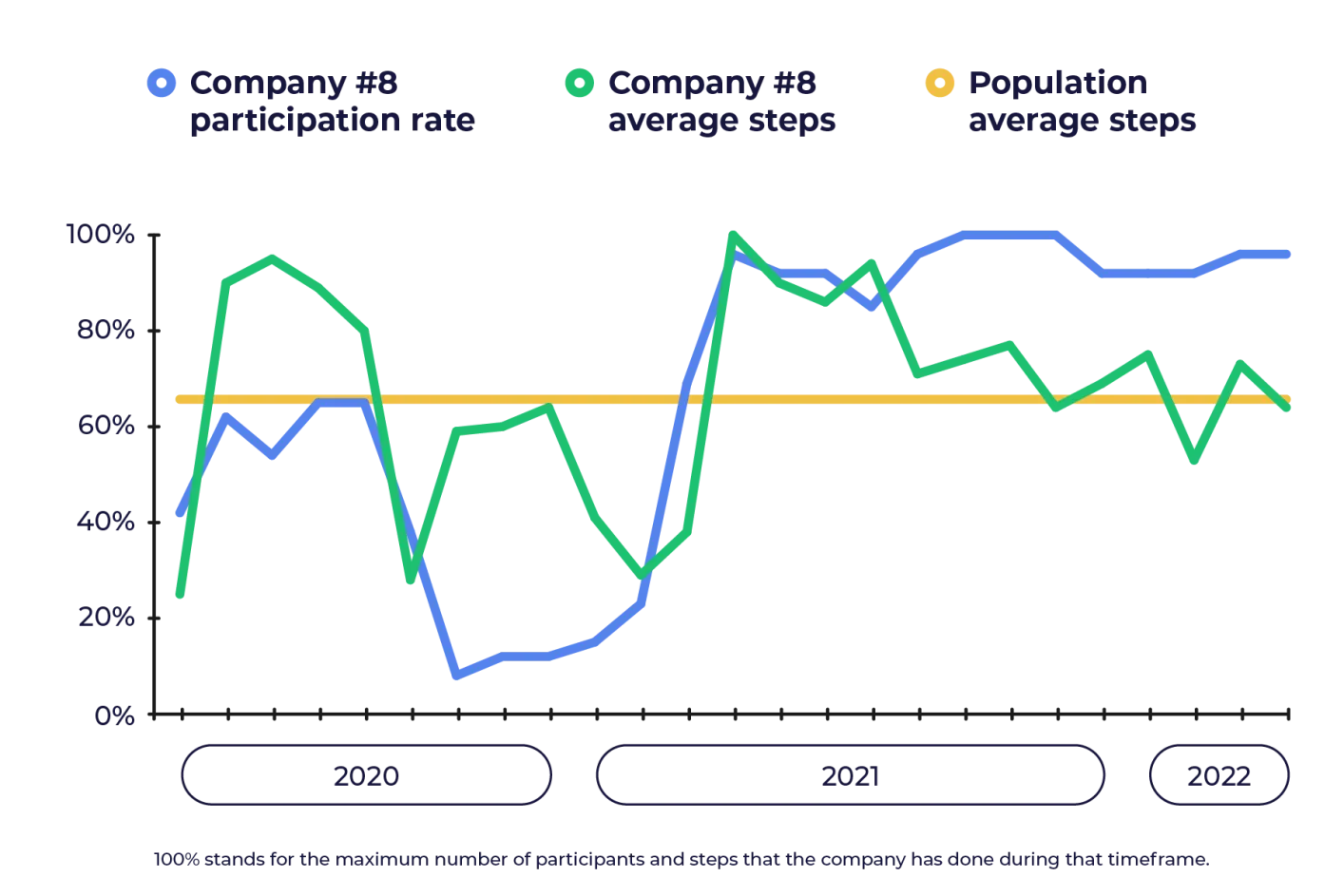
3. 9. Who You Reward Shapes the Outcome
This company consistently rewarded everyone who reached a certain activity level, not just a few. Big lottery prizes for only a handful of people can put others off, because their chances feel slim. When something good is available to everyone who makes an effort, more people join in.
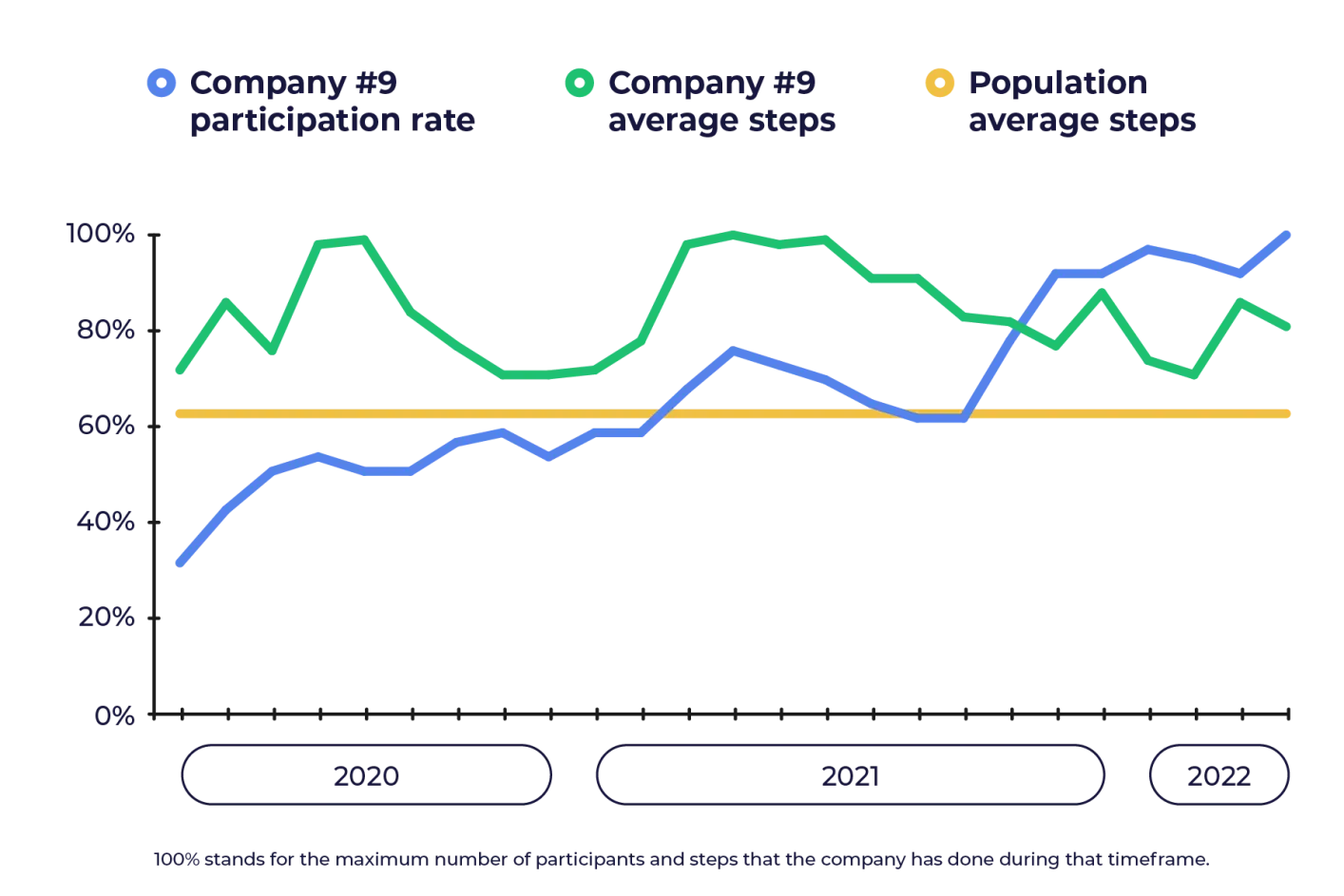
10. An Exemplary Company
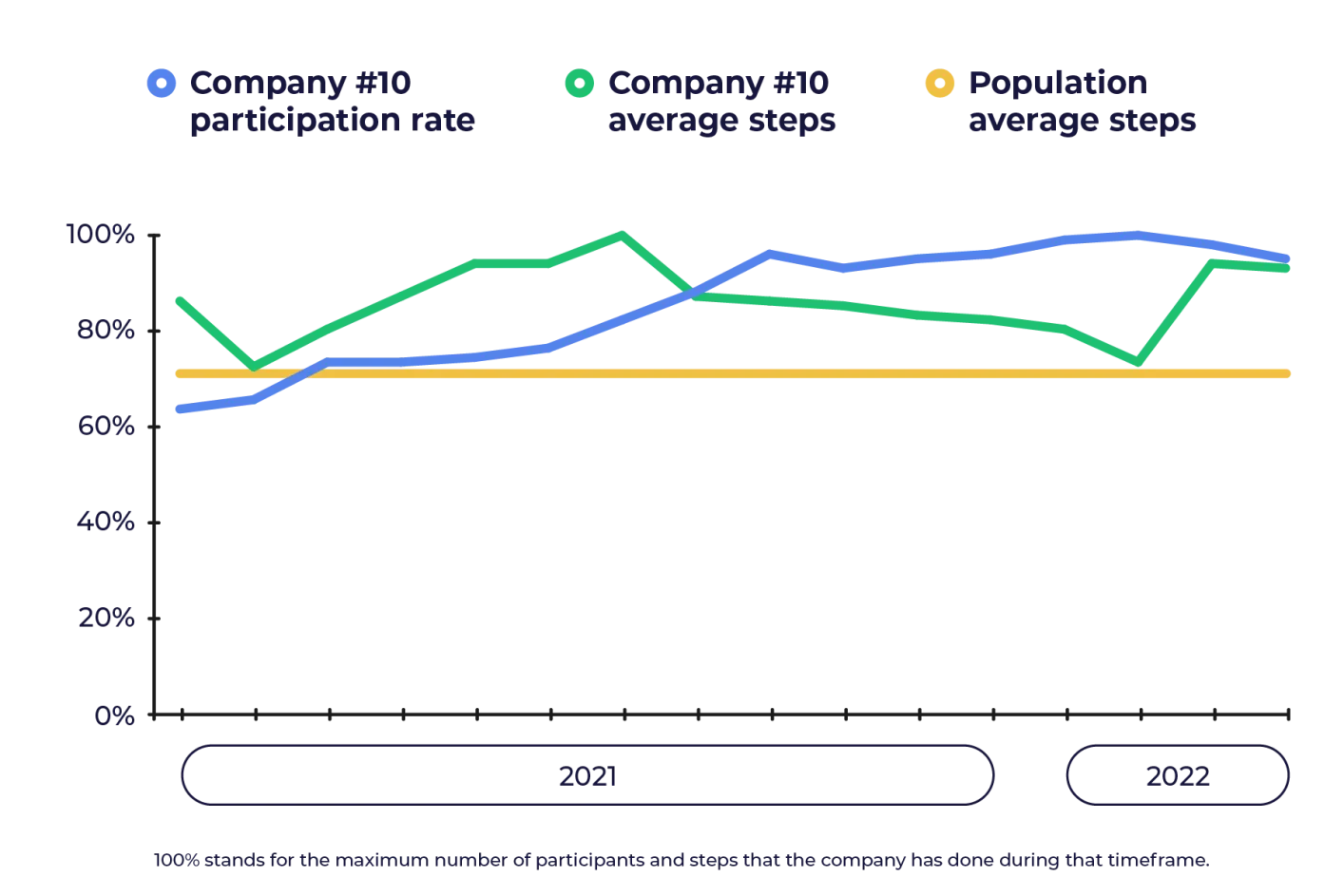
Finally, an example that may not top any single category but is excellent in all of them: it increased its YuMuuv user base by 50% in 16 months. Clear, constant communication played a big role, together with steady investment in measuring and rewarding active lifestyles. The result is a real breakthrough in workplace culture and wellbeing – a goal worth striving for.
What This Means for Your Company
What we measure is what we value. If you care about employee health and engagement, track both participation and activity, keep a steady rhythm of challenges, reward effort broadly and communicate consistently. Alongside employee feedback, objective activity data is a good mirror for your team's wellbeing. For practical next steps, see how to involve more employees in your challenges, our 12-month wellness program example and the wellness KPIs to track.
Want to build long-term engagement in your company? Book a demo.